News
 7th April 2024 – Western Yellow Wagtail, Black-headed race Motacilla flava Feldegg
Member Tharanga Herath with non-member Mekhala Dahanayake observed a Black-headed race of Western Yellow Wagtail at Pepiliyana wetland on 7th April 2024. The accompanying photograph was taken by Tharanga Herath.
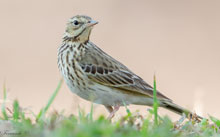 25 November 2022 - Tree Pipit Anthus trivialis
Member Rahal Fernando observed and photographed a Tree Pipit at Kerawalapitiya Waste Disposal site on 25th November 2022 around 4:30PM. This is the first record of this species for the country. The accompanying photograph was taken by Rahal Fernando.
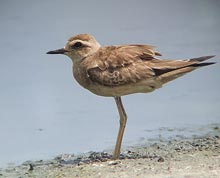 12th November 2022 - Caspian Plover Charadrius asiaticus
Member Tharanga Herath with non-members Mekhala Dahanayake & Tharulya observed a Caspian Plover at Kalamatiya wetland on 12th November 2022. The accompanying photograph was taken by Tharanga Herath.
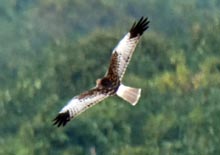 04 December 2021 - Eastern Marsh Harrier Circus spilonotus
Non-members Malika Jayathilake with his son’s Dinidu & Navodha Jayathilake, and Gary Allport, with Members Ravi Darshana, Senehas Karunarathna, Iroshan Rupasinghe, Moditha Kodikara Arachchi, and Ashoka Amarasena observed and photographed an Eastern Marsh Harrier – male at the Kerawalapitiya Waste disposal site around 06:50am on 4th December 2021. This is the first record of this species in the country. It was observed and photographed again at the same site on 16 February 2022 by the first three non-members. The accompanying photograph was taken by Malika Jayathilake.
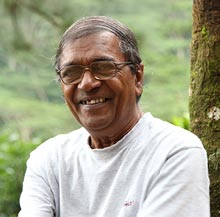 It is with great sorrow that we report the passing away of Mr Nanda Senanayake on the 12th of January 2022.
He was Chairman Emeritus of the Ceylon Bird Club and its Chairman from 2000 to 2013.
Few equaled his knowledge of our birds. His records of nests and eggs of our birds is an outstanding contribution to the study of Sri Lankan birds.
He was an expert on the Sri Lankan Leopard and wrote a book ‘ Leopard Observations - Yala National Park’ based on his experiences with the species.
With his passing away we have lost an outstanding Ornithologist and Naturalist.
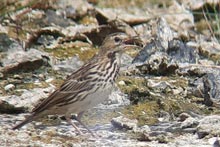 21 December 2021 Red- throated Pipit Anthus cervinus
Member Tharanga Herath with non-member Mekhala Dahanayake observed a Red- throated Pipit, a 1st winter bird, on 21 December at Kerawalapitiya Waste disposal site. The accompanying photograph was taken by Tharanga Herath.
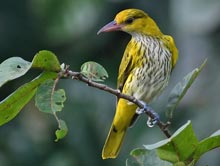 16 December 2021 Black-naped Oriole Oriolus chinensis
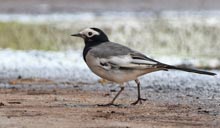 01 December 2021 White Wagtail Motacilla alba ssp. personata
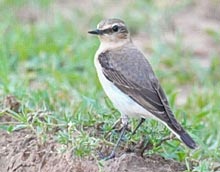 30 November 2021 Northern Wheatear (Oenanthe oenanthe), Yala National Park
On 30 Nov 2021 at Yala National park non-members Janith Jayarathne & Dr. K. Thirumavalavan observed and photographed a Northern Wheatear. This is the 2nd record of this species in Sri Lanka. The accompanying photograph was taken by Dr. K. Thirumavalavan.
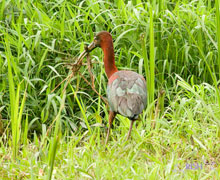
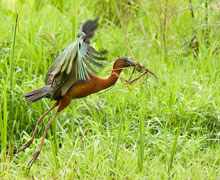
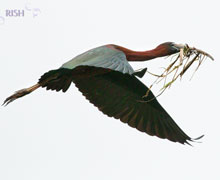
14th Nov 2021 Glossy Ibis (Plegadis falcinellus), Kimbulawala Paddy fields.
Non-member Rishani Gunasinghe reports a Glossy Ibis in breeding plumage in the Kimbulawala Paddy fields, from there, it was photographed carrying nesting material and flying towards Talawatugoda/Pelawatta junction towards a possible nesting site.
The accompanying photographs were taken by Rishani Gunasinghe.
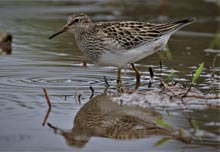 25th October 2021 Pectoral Sandpiper Ereunetes melanotos
On 25th October 2021 Affiliate Upeksha Nayani Weerasinghe and Member Dulan Ranga Vidanapathirana observed and photographed a first-winter Pectoral Sandpiper Ereunetes melanotos at Pahalawaththa paddyfield, Horape.
The accompanying photograph was taken by Upeksha Nayani Weerasinghe.
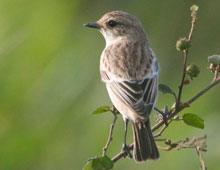
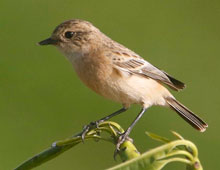 08th October 2021 Siberian Stonechat Saxicola maurus
On 08th October 2021 at around 4pm, Non-member Thusitha Weerasingha observed a Siberian Stonechat at Kirala Kele Sanctuary, Matara.
The accompanying photographs were taken by the observer.
19th September2021 Wire-tailed Swallow Hirundo smithii
Non members W.D. Lahiru Prasanna Walpita and P.A.D.D.A Priyan report two Wire tailed Swallows from Mannar, near the Ollaithoduwai fishing village on the 19th of September 2021.
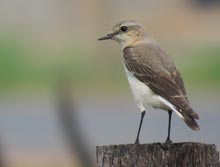
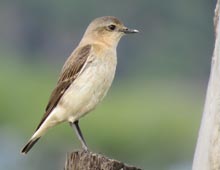 30th December 2020 Northern Wheatear Oenanthe oenanthe
On 30th December 2020, Non-Member Susantha Weerappuli and five others identified a female Northern Wheatear in worn plumage. The bird was seen at Korakulam at 8.55 am. This is the first record of this species in Sri Lanka.
The accompanying photographs were taken by Susantha Weerappuli
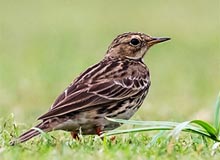
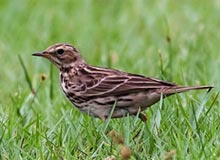 21st December 2020 Red-throated Pipit Anthus cervinus
Member Moditha Kodikara Arachchi reports a Red-throated Pipit from Nawala. It was first seen by non-member Dr. Gary Allport on 20th December 2020 and is the second record for Sri Lanka.
Subsequently member Moditha Kodikara Arachchi sighted three Red-throated Pipits at Kalpitiya on 27th January 2021.
The accompanying photographs were taken by Moditha at Nawala.
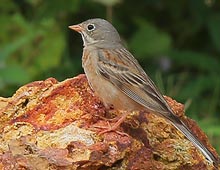 3rd December 2020 Grey-necked Bunting Emberiza buchanani
Member Dulan Ranga Vidanapathirana observed a Grey-necked Bunting at Ragama.
The accompanying photograph was taken by Uditha Hettige.
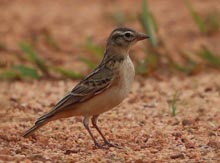 1st December 2020 Eastern Short-toed Lark Calandrella dukhunensis
Members Dulan Ranga Vidanapathirana and Gehan Rajeev observed and photographed an Eastern Short-toed Lark at Ragama.
The accompanying photograph was taken by Gehan Rajeev.
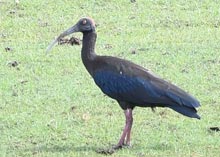 18th November 2020 Indian Black Ibis Pseudibis papillosa
Non-member Lahiru Prasanna Walpita observed an Indian Black Ibis at Mannar island near the Olaithoduvai area on 18th November 2020.
This is the first record of this bird in Sri Lanka.
The accompanying image was taken by the observer.
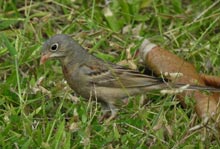 14th November 2020 Grey-necked Bunting Emberiza buchanani
Member Hemantha Seneviratne observed a Grey-necked Bunting in a private property at Ambalangoda town.
He observed the bird from 9 am till 12.15 pm.
The accompanying image was taken by the observer.
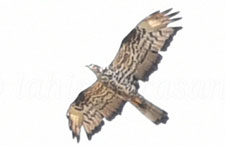 6th November 2020 European Honey Buzzard Pernis apivorus
Non-member Lahiru Prasanna Walpita observed a European Honey Buzzard at Mannar island near the Olaithoduvai area on 6th November 2020.
This is the second record of this species in Sri Lanka.
The accompanying image was taken by the observer.
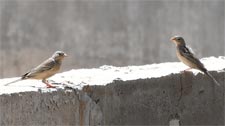 5th November 2020 Grey-necked Bunting Emberiza buchanani
Non member Lahiru Prasanna Walpita observed two Grey-necked Buntings at Mannar Island near the Olaithoduvai area at 11.30 a.m. on 5th November
The accompanying photograph was taken by the observer.
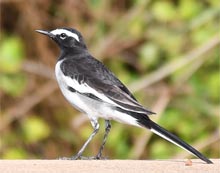 29th October 2020 Large Pied Wagtail (White-browed Wagtail) Motacilla
maderaspatensis
Non member Lahiru Prasanna Walpita observed a Large Pied Wagtail (White-browed Wagtail) near the Olaithoduvai fishing village in Mannar.
The accompanying photograph was taken by the observer.
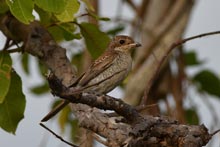 17th October 2020 Red-backed Shrike Lanius collurio
Member Ravi Darshana together with Non-Member Kasun Kalhara observed a juvenile Red-backed Shrike at the Anawilundawa Wetlands, a Ramsar Site in Chilaw. The sighting was around 4.30 p.m.
This is the first record of this bird in Sri Lanka.
Photograph by Ravi Darshana.
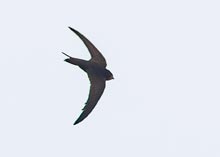 25th August 2020 Common Swift Apus apus
Non-member Ragupathy Kannan together with Affiliate Pavan Gamage report a Common Swift Apus apus from Brown's Hill, Matara.
The bird was first seen on 25th August 2020 and several times subsequently. The photographs provided to the CBC showed the bird is a juvenile and its features suggest that it is probably of the subspecies A. a. pekinensis.
This is the first record of this species in Sri Lanka.
Photograph by Pavan Gamage.
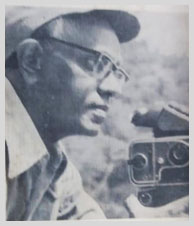 Dr T.S.U De Zylva (1927-2020)
It is with great sorrow that the Ceylon Bird Club records the passing away of Dr T S U De Zylva (Upen to his friends) at his home in Kurunegala on the 13th of August 2020.
He was one of the most senior members of the Ceylon Bird Club. His knowledge on the birds of Sri Lanka was paralleled only by a few. He was well known for his bird photography. Although it was W W A Phillips who pioneered bird photography in Sri Lanka, it was Dr De Zylva who took bird photography in this country to great heights with ornithological accuracy and technical perfection.
He published many books on the birds of Sri Lanka and the information and the photographs that appeared in these are considered to be invaluable.
He was active in conservation as well and was in the Committee of the WNPS and its President.
With his passing away, the Ceylon Bird Club and the country loses an outstanding ornithologist, conservationist and bird photographer par excellence.
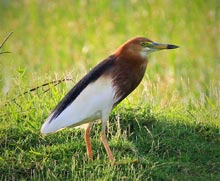
16th May 2020 Chinese Pond Heron Ardeola bacchus
Non Member Thishan Jeevaka Perera observed and photographed two Chinese Pond Herons at Halmillagolawa Wewa, Saliya Wewa, Puttalam.
This is the second time this species is reported from Sri Lanka.
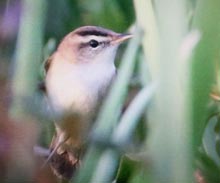 3rd February 2020 Black-browed Reed Warbler Acrocephalus bistrigiceps
Member Moditha Kodikara Arachchi along with Members Sarath Seneviratne, Hemantha Seneviratne and Iroshan Rupasinghe sighted a Black-browed Reed Warbler at Embilikala, Bundala NP.
This is the second report of the same bird at this location.
The accompanying photograph was taken by Moditha Kodikara Arachchi.
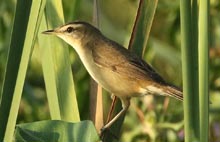 25th January 2020 Black-browed Reed Warbler Acrocephalus bistrigiceps
Non Member Tim Cowley and some others observed and photographed a Black-browed Reed Warbler at Embilikala, Bundala.
This is the first record of the Black-browed Reed Warbler in Sri Lanka.
The accompanying photograph is by Mark Leitch, who was a member of the group that observed this bird.
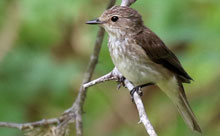 10th January 2020 Spotted Flycatcher Muscicapa striata sarudnyi
Member Iroshan Rupasinghe together with members Moditha Kodikara Arachchi, Affiliates Pavan Thilina Bopitiya Gamage and Vidya Vimani observed a Spotted Flycatcher Muscicapa striata at Kalametiya Bird Sanctuary.
This is the second sighting in Sri Lanka, of this bird.
The accompanying photograph was taken by Iroshan Rupasinghe.
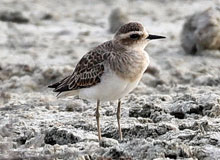
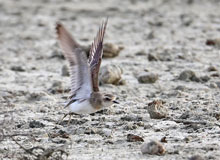 1st January 2020 Caspian Plover Charadrius asiaticus
Non-members Gayomini Panagoda and Udaya Karunaratne observed and photographed a Caspian Plover roosting along with other small waders in Pudukuduirruppu Lagoon, Karisal, Mannar Island.
The accompanying photographs were taken by Udaya Karunaratne.
29th December 2019 Wire-tailed Swallow Hirundo smithii
A Wire-tailed Swallow was seen by member Ravi Darshana at the Colombo outer Highway, Near Kerawalapitiya entrance around 4.55 p.m. No photographs were taken.
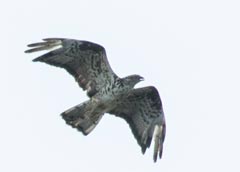 16th December 2019 European Honey Buzzard Pernis apivorus
Members Moditha Kodikara Arachchi and Sampath Seneviratne observed and photographed a European Honey Buzzard at Vankalai Sanctuary, Mannar. This is the first record of the species from Sri Lanka and probably the second record in South Asia.
The accompanying photograph was taken by Moditha Kodikara Arachchi.
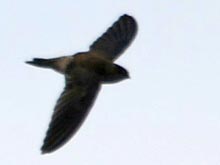
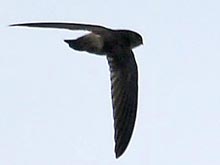 13th and 18th November 2019 Himalayan Swiftlet Aerodramus brevirostris
In November 2019, Member Thushara Senananayake informed the CBC of some unusual swiftlets which he thought were Himalayan Swiftlets flying over the Lunawa station on 13th and 18th November 2019 They were subsequently positively identified as Himalayan Swiftlets.
They were seen again by Member Thushara Senanayake at the same site on 12th December but were not seen thereafter.
This is the first record of this species for Sri Lanka.
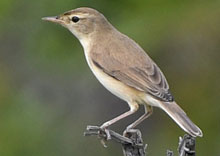 9th November 2019 Booted Warbler Iduna caligata
Member Ravi Darshana observed a Booted Warbler at Delft Island around 10.00 a.m.
The accompanying photograph was taken by Ravi Darshana
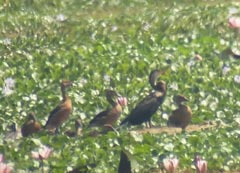 7th April 2019 Large Whistling Teal Dendrocygna bicolor
CBC Members and Affiliates participating at the Field Workshop on Waterbird Census at Anavilundawa Ramsar site observed six Large Whistling Teals at Suruvila Tank. They were first spotted by Member Gehan Rajeev.
The accompanying photograph was taken by Member Moditha Kodikara Arachchi.
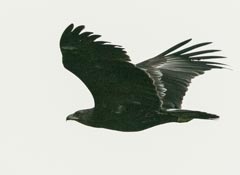 24th March 2019 Greater Spotted Eagle Clanga clanga
Non Member Rishani Gunasinghe observed and photographed a Greater Spotted Eagle at 6.50 a.m. near Kumana Villu.
2nd February 2019 Common Starling (Sturnus vulgaris)
Members Uditha Hettige and Akila Abeyratne closely observed an adult Common Starling in flight at Erukkalampidi, Mannar. This is the third record of this species in Sri Lanka.
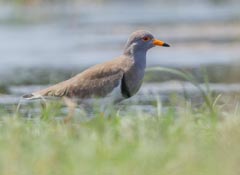 1st February 2019 Grey-headed Lapwing (Vanellus cinereus)
Members Deepal Warakagoda, Uditha Hettige and Akila Abeyratne found an adult Grey-headed Lapwing at Korakulam in Mannar. This photograph was taken by Akila Abeyratne.
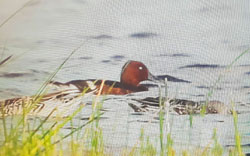 12th January 2019 Ferruginous Duck Aythya nyroca
Member Gehan Rajeev and non member Chaminda Mahanayaka observed a male Ferruginous Duck in Mannar.
It was swimming and feeding with other duck species mainly Pintail and Garganey. A few Wigeon and Common Teal were also in the vicinity.
It had a dark chestnut head and underparts and darker upperparts. The undertail was white and the eyes appeared brilliant white and were prominent. It was a little smaller than a Garganey.
This is the first record of this duck in Sri Lanka and we congratulate Gehan on his historic discovery
This photograph was taken by Gehan Rajeev
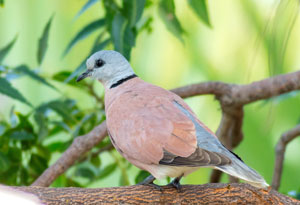 25th December 2018 Red Turtle Dove / Red Collared Dove Streptopelia tranquebarica
Members Moditha Kodikara Arachchi and Iroshan Rupasinghe and Affiliates Pavan Bopitiya Gamage and Rahal Fernando observed a male Red Turtle Dove along the Medawachchiya-Talaimannar Road.
The bird was seen from 12.05 p.m. to 12.25 p.m. between the 111/2 and 111/3 culverts. It was initially perched on a telegraph wire and then descended to the ground. Thereafter, it moved around flying into the bushes nearby and back onto the telegraph wire.
This photograph was taken by Moditha Kodikara Arachchi
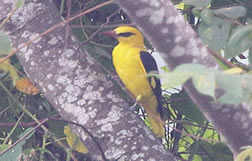 23rd December 2018 Indian Golden Oriole Oriolus kundoo
Subsequent to Member Ashok Amarasena’s first sighting of a male Indian Golden Oriole for this season on 20th December, Member Deepal Warakagoda observed three males and one female at Diyasaru Park, Thalawathugoda, on 23rd December. Member Tara Wikramanayake was also present.
They were seen between 7.55 a.m. and 8.20 a.m. on the trees farthest from the watchtower and were flying about from tree to tree. They then disappeared behind / into the rubber trees.
This photograph was taken by Member Pathmanath Samaraweera on 21st December.
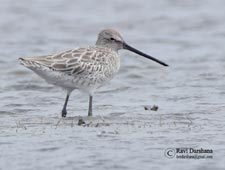
18th September 2018 Asian Dowitcher Limnodromus semipalmatus
Member Ravi Darshana observed and photographed an Asian Dowitcher at Bundala Lewaya (Bundala Lagoon) at 1.20 pm. This is the fourth record of the sighting of this species.
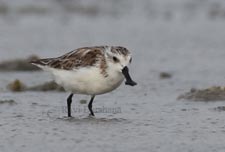 6th June 2018 Spoon-billed Sandpiper Eurynorhynchus pygmeus
Member Ravi Darshana observed and photographed a Spoon-billed Sandpiper at Vankalai Sanctuary. This extremely rare and globally critically endangered shorebird was among a small flock of Lesser Sand Plovers, Kentish Plovers, Little Stints, Curlew Sandpipers and Marsh Sandpipers. The bird was an immature in non-breeding plumage.
It was seen between 5.15 p.m. and 5.55 p.m.
We congratulate Ravi on this important find.
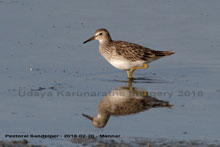
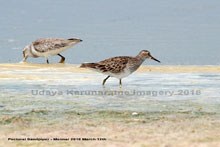
20th, 21st, 23rd February and 12th March 2018 Pectoral Sandpiper Calidris melanotos
Non Member Udaya Karunaratne observed and photographed a Pectoral Sandpiper in the Pudukudyirruppu Lagoon in Mannar on the above dates. This is the second record in Sri Lanka, of this extremely rare vagrant.
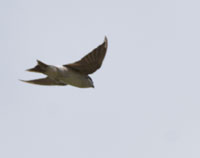
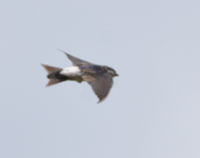
5th February 2018 Northern House Martin Delichon urbicum
Member Moditha Kodikara Arachchi together with Members Senehas Karunarathne, Ravi Dharshana, Ashok Amarasena and non-member Saranga Deva de Alwis have observed a Northern House Martin at Udawalawe Causeway.
This is the third record of this species in Sri Lanka.
The photographs were taken by Ravi Dharshana.
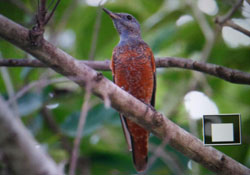 22nd January 2018 Rufous-tailed Rock Thrush Monticola saxatilis
Member Dulan Ranga Vidanapathirana together with a birdwatching group including Liu Liang Li, Liao Mei-feng and Mark Philippart have found a Rufous-tailed Rock Thrush at Udawalawe.
This is the first record of this species in Sri Lanka.
The photograph here was taken by Dulan Ranga Vidanapathirana.
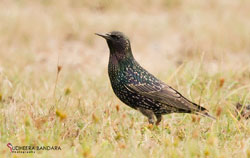 22nd January 2018 Common Starling Sturnus vulgaris
On Monday 22nd January 2018, Members Sudheera Bandara and Ashok Amarasena observed an adult Common Starling Sturnus vulgaris in Kumana National Park. This is the second record of this species for Sri Lanka.
The first record of this species was by member Dulan Vidanapathirana when he observed a juvenile on 18th November 2017 at Weligatta, Bundala.
The accompanying photograph is by Sudheera Bandara.
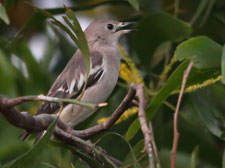 4th January 2018 Daurian Starling Agropsar sturninus
Member Deepal Warakagoda observed a Daurian Starling (a female or an immature) roosting at the Common Myna roost in the trees on island in Diyawanna Oya by the car park at Kimbulawala junction, Thalawatugoda.
The accompanying photograph was taken by member Gehan Rajeev at the roost on 6th January.
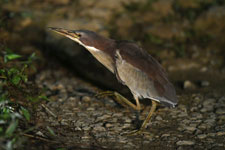 1st January 2018 Von Schrenck's Bittern Ixobrychus eurhythmus
Member Dulan Ranga Vidarapathirana observed a Von Schrenck's Bittern, with non-members Torbjon Vik, Morgan Svensson, Kajsa Vik and Lena Geiser.
This is the first record of this species in Sri Lanka.
The accompanying photograph was taken by Torbjon Vik.
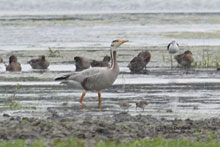 19th December 2017 Bar-headed Goose Anser Indicus
CBC Affiliate Ravi Darshana observed a Bar-headed Goose at Kora Kulam, Mannar, early in the afternoon.
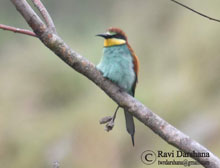 15th December 2017 European Bee-eater Merops Apiaster
CBC Affiliate Ravi Darshana observed about 100 European Bee-eaters at two locations along the Bandarawela - Poonagala road.
The first location was about 4 km from Bandarawela town where there were over 75 birds and the other location was about 14 km from Bandarawela town where over 20 birds were seen.
29th November 2017 Spotted Flycatcher Muscicapa striata
Member Uditha Hettige observed a Spotted Flycatcher at Yala near Butuwa junction.
This is the first record of this bird for Sri Lanka.
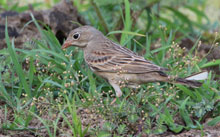 18th November 2017 Grey-necked Bunting Emberiza buchanani
Non Members Chris & Denise Lamsdell report observing a Grey-necked Bunting feeding alongside a small water body near the entrance to the Ruhunu National Park (Yala).
This is the third sighting of this bird, for Sri Lanka.
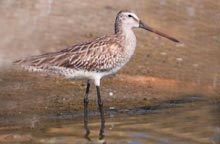 18th March 2017 Asian Dowitcher Limnodromus semipalmatus
Member Sudheera Bandara with non-member Ashok Amarasena and Assistant Ranger Gayan Prasanga observed an Asian Dowitcher at the Bundala Salterns.
This is the third record of the sighting of this species, for Sri Lanka.
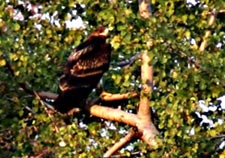 16th February 2017 - Greater Spotted Eagle Clanga clanga
Member Amila Salgado observed an immature Greater Spotted Eagle at 5.30 p.m. at Udawalawe National Park - Wew Pitiya near the Grey Heron nests. Visiting birders Kevin Stracey and Elizabeth Dodd from South Australia were also present.
The accompanying photograph was taken by Kevin Stracey
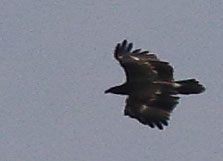 8th January 2017 - Greater Spotted Eagle Clanga clanga
Member Moditha Kodikara Arachchi reported a Greater Spotted Eagle from Kirala Kele Wetland, Matara. This is the second record of this species in Sri Lanka. The accompanying photograph was taken by non-member Premasiri Mapalagama.
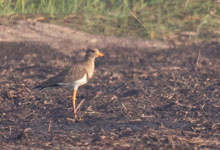 3rd December 2016 Grey-headed Lapwing Vanellus cinereus
Members Deepal Warakagoda and Senaka Abeyratne report an adult Grey-headed Lapwing at Nadugala marsh, Matara.
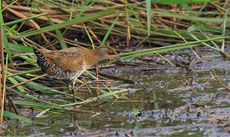 29th November 2016 - Baillon's Crake Porzana pusilla
Non-member Harsha Meemaduma with a group of bird watchers observed an unidentified Crake at Kirala Kele wetland, Matara. It was identified as a Ballon's Crake by member Moditha Kodikara Arachchi and subsequent observations revealed three Baillon's Crakes at the same location including two immature birds and a sub-adult. The accompanying photograph was taken by member Pathmanath Samaraweera.
19th & 21st November 2016 White Wagtail Motacilla alba
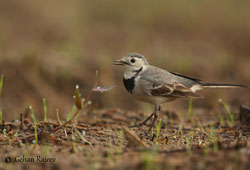
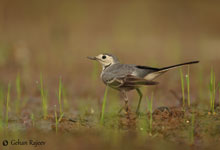
Members Gehan Rajeev and Dulan Ranga Vidana Pathirana observed and photographed a White Wagtail in some paddy fields at Kurukulawa, Ragama.
This is the most recent sighting of the White Wagtail in the wet zone as this bird is usually recorded in the dry zone
13th November 2016 Isabelline Wheatear Oenanthe isabellina
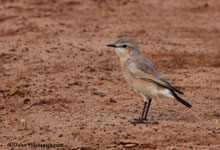
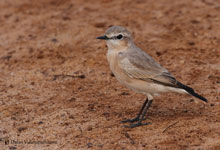
Member Tharanga Herath reported an Isabelline Wheatear that was seen by non- member Dhammithra Samarasinghe on the 28th of October 2016 at the Buththawa Pitiya in the Yala NP.
Subsequently on 13th November 2016, member Dulan Ranga Vidana Pathirana saw and photographed the bird at the same location.
7th November 2016 Comb Duck Sarkidornis melanotos
Member Uditha Hettige has seen 47 Comb Ducks at the North-West corner of Debera Weva in Tissa. Also, an Indian (Oriental) Hobby Falco severus was seen flying over the tank there.
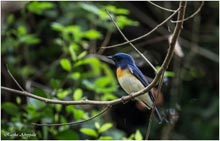
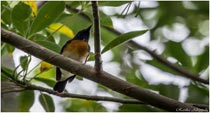 5th November 2016 Blue-throated Flycatcher Cyornis rubeculoides
Non-member Dr. Rasika Abeypala reports a male Blue-throated Flycatcher in the premises of the Base Hospital at Thabuttegama at 8.20 a.m. - the first record of this rare migrant for this season.
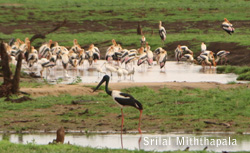 November 2nd 2016 Black-necked Stork Ephippiorhynchus asiaticus
Non-member Srilal Miththapala observed an adult male Black-necked Stork at Mau Aru in the Uda Walawe National Park at 5.16 p.m.
This is probably the first record of the Black-necked Stork at Uda Walawe N.P.
2nd April 2016 Bar-headed Goose Anser indicus
Member Sampath Seneviratne reports the sighting of a Bar-headed Goose Anser indicus at Sinnavikulum Tank (North of Thiruketeeswaram Railway Station and the Mannar-Medawachchiya Road) at 6.30 a.m. The bird was seen flying across the road. It could not be encountered during his subsequent search for it in the area.
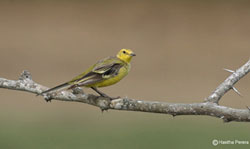
20th February 2016 Yellow Wagtail Motacilla flava lutea
Members Hasitha Perera and Moditha Kodikara Arachchi observed and photographed a specimen of M. f, lutea in Embilikala, Bundala. This is a race of the Yellow Wagtail.
Tharanga Herath reports seeing an Eurasian Wryneck in the morning of 24th January 2016 at Palugaswala, Yala National Park.
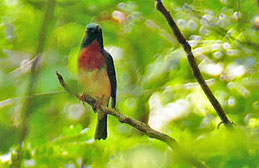
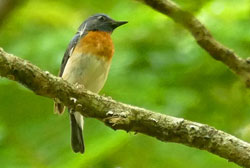 12th January 2016 Blue-Throated Flycatcher Cyornis rubeculoides
Deepal Warakagoda with non-members David Cohen, Jim Graham and Sue Graham report a Blue-throated Flycatcher (Cyornis rubeculoides) from Tanamalwila. Jim Graham has taken the photographs featured here. The bird quite possibly belongs to the subspecies C. r. dialilaema.
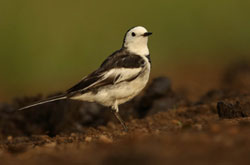 27th December 2015 White Wagtail (Motacilla alba leucopsis)
Member Sudheera Bandara and non-members Ashok Amarasena, Induka Andris and Piumali Balasooriya reported a sighting of this subspecies of the White Wagtail at Udawalawa National Park on 27.12. 2015.
The first sighting of this sub-species was recorded by Deepal Warakagoda on 22nd March 1995 at Kalametiya. (Ceylon Bird Club Notes & A Guide to the Birds of Ceylon by G.M. Henry, 3rd Revised Edition)
The second record was made by non member G.K. Wasiri Rasu on 14th February 2011 on the shoreline of Embilikala Kalapuwa inside the Bundala National Park.
Thus the present sighting is the third for Sri Lanka.
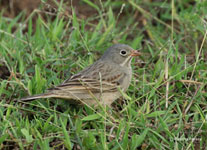
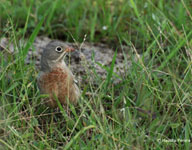 06th December 2015 A Grey-necked Bunting (Emberiza buchanani)
"A Grey-necked Bunting (Emberiza buchanani) was reported by non-member Mr. Dhammithera Samarasinghe on 06th December 2015 at Yala National Park. Subsequently CBC members Hasitha Perera, Gehan Rajeev, Hemantha Seneviratne, Moditha Kodikaraarachchi and affiliate Suranga Galwatta have visited the site and photographed the bird on 13.12.2015."
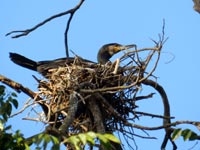
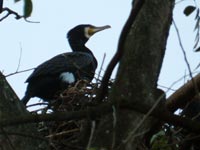
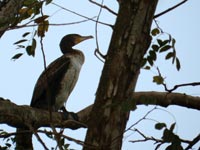
On December 1st 2015, a nesting population of Great Cormorants was observed at the Kandy Lake by Tharanga Herath, non-members Brian Small, Gary Elton and others in a small birding group.
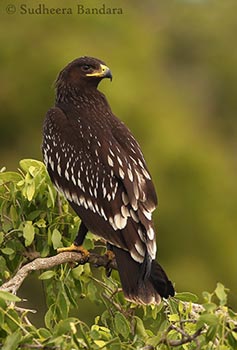
20th November 2015 Greater Spotted Eagle Clanga clanga
A juvenile Greater Spotted Eagle was recorded by member Sudheera Bandara on 20.11.2015 along with a group of non-members in the Kumana National Park. The non-members present were Ashok Amarasena, Isuru Ranasinghe, Ravindra Siriwardene, Nishantha Manjula, Lakshitha Karunarathne, Amila Goonatilleke, Sadheepa Gunawardhana and Milinda Wattegedera.
This is the first definitive record of this species in Sri Lanka.
8th July 2015 Large Whistling Teal/Fulvous Whistling-duck (Dendrocygna bicolor)
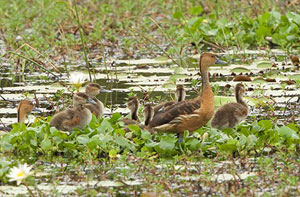 On Wednesday, 8th July 2015 at 8.15 a.m. CBC member Tara Wikramanayake saw seven Large Whistling Teal/Fulvous Whistling-duck (Dendrocygna bicolor) chicks swimming between their parents at Anavilundawa Tank. Further scrutiny revealed scattered adults in pairs as well as solitary individuals.
This is the first record of this vagrant to Sri Lanka, breeding here. In the interests of the birds’ well being and security (especially since it has started to breed), all visitors to the location are requested to act with caution and responsibility as we would like to see this bird establish itself as a breeding resident.
- Photo by Palitha Antony-
8th February 2015 Slender-billed Gull Larus genei
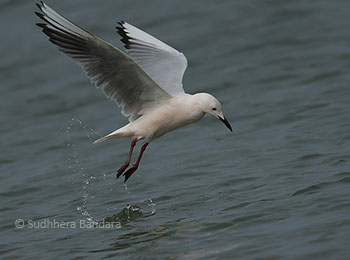 CBC members Sudheera Bandara, Kiran Kumaranayagam and Udaya Sirivardena report 43 Slender-billed Gulls Larus genei near the Sangupiddi Bridge, Pooneryn-Navatkuli road on the 8th and 9th February.
This is the second record for Sri Lanka.
CBC member Shalinka De Silva reported seeing some unusual Gulls at the same location on 2.2.2015. Photographs taken show that they were of the same species.
8th February 2015 Ruddy Shelduck Tadorna ferruginea
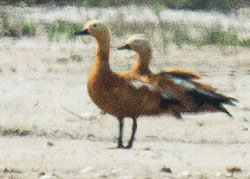
CBC Affiliate Moditha Kodikara Arachchi records three Ruddy Shelduck Tadorna ferruginea from the Vankalai Sanctuary, Mannar on 8.2.2015.
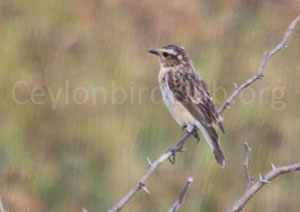
8th February 2015 Whinchat Saxicola rubetra
.jpg "Winchat")
A bird resembling a Whinchat Saxicola rubetra was recorded by CBC member Chintaka De Silva and non members Janith Jayarathna and Clemens Steiof at Uda Walawa National Park on the 8th of February.
A few members of the Ceylon Bird Club Rarities & Records Committee who visited the site, observed the bird and comment that it is an immature. Further observations are needed to determine its identity. The CBC will be continue to study this bird throughout the season to confirm the identity.
8th February 2015 Siberian Stonechat Saxicola maurus
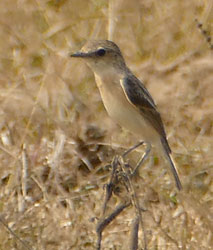
A Siberian Stonechat Saxicola maurus was seen at Uda Walawa National Park on 8.2.2015 by CBC member Chintaka de Silva and non members Janith Jayaratne and Clemens Steiof. This is probably the second record for Sri Lanka.
7th February 2015 Grey-headed Starling Sturnia malabarica
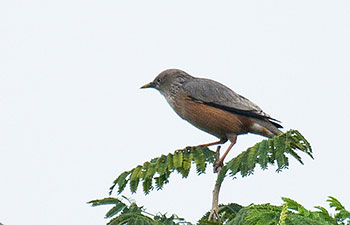
Four Grey-headed Starlings Sturnia malabarica were observed by CBC Affiliate Moditha Kodikara Arachchi on 7.2.2015 at Irukalampiddi, Mannar.
1st February 2015 Eye-browed Thrush Turdus obscurus
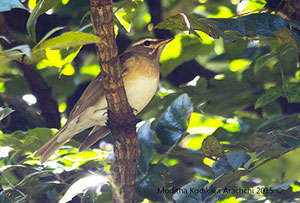
CBC Affiliate Moditha Kodikara Arachchi reports an Eye-browed Thrush Turdus obscurus from the Victoria Park in Nuwara Eliya.
5th December 2014 - EURASIAN HOBBY Falco subbuteo
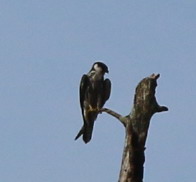 An Eurasian Hobby was observed by member Athula Dissanayaka on 5.12.2014 at Karapitiya, Galle. It was an immature bird perched on the top of a dead, bare Jak tree.
This is the second record for Sri Lanka.
14th November 2014 - Nest of Common Coot Fulica atra
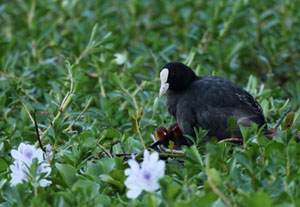 Member Tara Wikramanayeke reports a nest of a Common Coot at Anavilundawa. Another nest was seen at the same location on 27.11.2014. Young of the first nest hatched out on 7.12.2014 as reported by member Kithsiri Gunawardena.
This is the second record of Common Coots nesting reported to the Ceylon Bird Club.
August 2014 - Red-backed Woodpecker
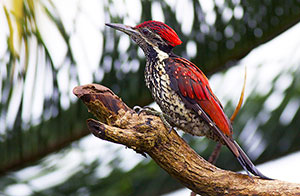 The Red-backed Woodpecker Dinopium benghalense psarodes has been treated as a full endemic species in the latest ‘Illustrated Check list of the Birds of the World ‘ Vol 1, Non-Passerines, issued by Lynx and Bird Life international.
The criteria given are differences in colour and measurements. The authors also mention that there is a narrow hybrid zone.
It is given the name Sri Lanka Lesser Flameback Dinopium psarodes.
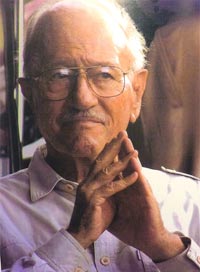 13th May 2014 Mr Th W Hoffmann
It is with great sorrow that we announce the passing away of Mr Thilo W Hoffmann, Chairman Emeritus of the Ceylon Bird Club on the 13th of May 2014 at the age of 92.
He managed the affairs of the Ceylon Bird Club almost single handedly for many years as its Chairman, Secretary and Editor maintaining the club’s high standards to bring it to the prestigious position it enjoys today.
He was also the President of the Wild Life and Nature Protection Society of Sri Lanka from 1968 to 1980.
He was tireless in his efforts to conserve the Wild Life and the Environment of this country and is especially remembered for his role in saving the Sinharaja Reserve.
In 2005 he was awarded the ‘Sri Lanka Ratna’ which is the highest honour conferred to a non-national for exceptionally outstanding and most distinguished service to Sri Lanka.
The Ceylon Bird Club will miss his presence and guidance in the future.
13th March 2014 - Bluethroat Luscinia svecica
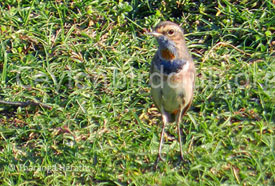 A Bluethroat Luscinia svecica svecica was reported by CBC Member Tharanga Herath. It was seen in the Bundala National Park, near the old campsite on the 13th of March 2014. He was able to photograph the bird while it fed on the ground.
This is the third record of the species after Layard’s record about a hundred years ago and that by E C Fernando in November 1955 in Boralasgamuwa, Western Province.
03rd March 2014 - Blue & White Flycatcher
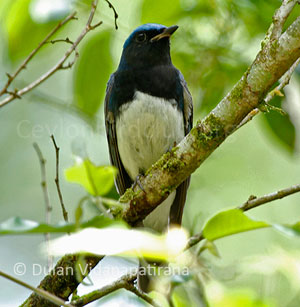 An unusual flycatcher has been spotted by Mr Pragnaratna, a guide attached to the Sinharaja Forest Reserve on 3.3.2014.
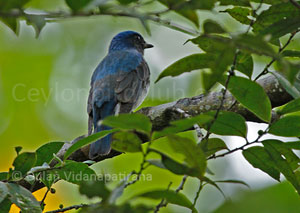
The bird has been identified as a Blue & White Flycatcher Cyanoptila cyanomelana – a first record for Sri Lanka and possibly the second for the Indian Region. CBC member Amila Salgado and non-member Dulan Vidanapatirana have reported the sighting to the Ceylon Bird Club on 3rd March 2014. The latter has submitted images of the bird which are included in this report.
3rd February 2014 - Eurasian Wryneck Jynx torquilla
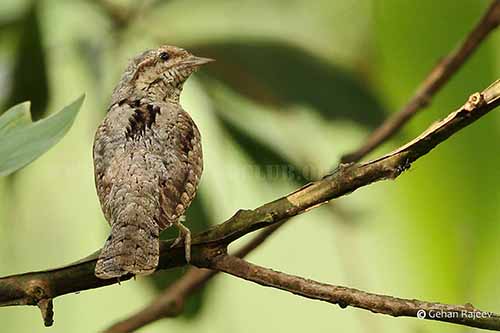 Non-member Dulan Ranga Vidanapathirana and CBC Affiliate M.D. Gehan Rajeev report an Eurasian Wryneck Jynx torquila from Kudawa, near Sinharaja Forest Reserve. It was first observed on 3.2.2014 by DRV and identity confirmed and photographed on 26.02.2014 by DRV and MDGR.
28th January 2014 - Eyebrowed Thrush Tudus obscurus
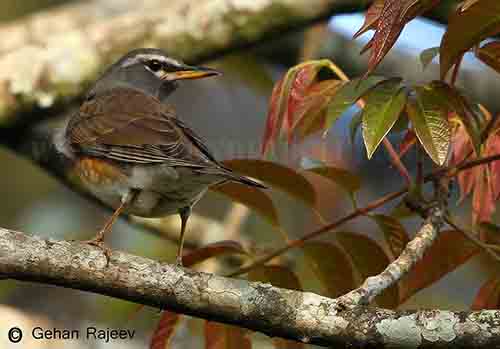
An Eyebrowed Thrush Turdus obscurus was reported by non-member Mr. Rohan Gunasekara on 28.1.14 from Victoria Park, Nuwara-eliya. It was seen with several Pied Ground Thrush Zoothera wardii. The accompanying photograph was subsequently taken by CBC Affiliate M.D Gehan Rajeev.
9th January 2014 - Daurian Starling Sturnia sturnina
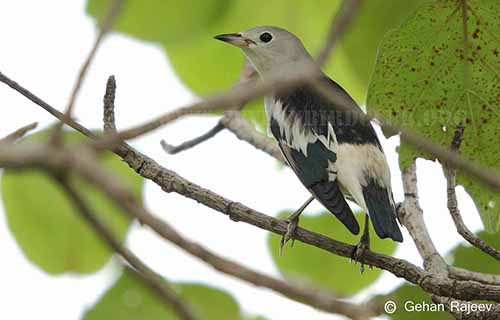
Non-member Dulan Ranga Vidanapathirana reports a flock of eight Daurian Starlings Sturnia sturnina on 9.1.2014 near the Udawalawa causeway. They were observed and photographed by CBC Affiliate M.D.Gehan Rajeev and CBC Member Sudheera Bandara two days after. Both male and female birds were identified. This is the second record of this species in Sri Lanka, the first by Mr. Upali Ekanayake in 2002 at the Udawalawa National Park.
19th February 2013 Lesser Flamingo in Jaffna
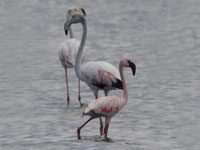 Members Uditha Hettige, Lester Perera and Udaya Sirivardana report two Lesser Flamingos from Jaffna on the Karainagar Causeway.
10th February 2013 A Red-necked Stint at Bundala National park.
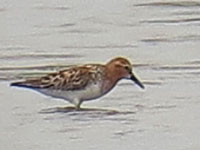 Member Deepal Warakagoda reports a Red-necked Stint in breeding plumage at the salterns within the Bundala National Park. It was first spotted by a British birder John Sutherby who was with Deepal, in a flock of Little Stints.
10th February 2013 A Long-toed Stint at Bundala
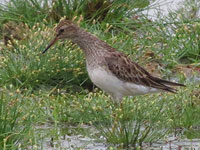 Member Deepal Warakagoda reports a Long-toed Stint at Bundala. It was with with several Temminck’s and Little Stints
A Comb Duck at Nawadamkulama on the 10th of February 2013
During a CBC affiliate field trip to the above location a single female Comb Duck was reported by members Tara Wickramanayake & Kithsiri Gunawardena.
A Bay-backed Shrike at Uda Walawa National Park
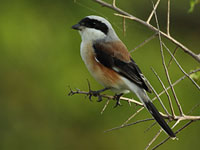 On the 2nd of February 2013, a Bay-backed Shrike Lanius vittatus was reported by member Kithsiri Gunawardena from ‘Mau Ara” road at Uda Walawa National Park. He was accompanied by K G Saman Kumara of the Department of Wildlife Conservation DWC.
This bird had been first observed ion the park by K G Lionel Gunatilleka of DWC but was identified as a Rufous-rumped Shrike.
Wilpattu National Park Declared as Sri Lanka’s 6th Ramsar Site
On the 2nd of February 2013, the Wilpattu National Park was declared a Ramsar Site. Udaya Sirivardena of the Ceylon Bird Club was actively involved in achieving this as he was for the declaration of the Vankalai Sanctuary in Mannar as a Sanctuary as well as a Ramsar Site. The Ceylon Bird Club is grateful to Udaya for his efforts and for handling all conservation related matters on behalf of the club.
15th August 2012 Debara Weva, Tissamaharamaya.
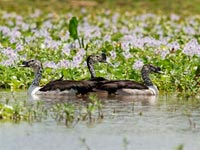 Non member Chandima Jayaweera reported four Comb Duck at the above tank on the 11th and 14th of August. Members Deepal Warakagoda and Palitha Antony saw the four Comb Duck there on the 15th following the above information. There were three males and one female.
11th August 2012 Tirukatiswaram Tank, Mannar
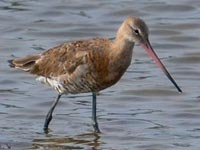 Member Hasitha Perera recorded over a 600 Black-tailed Godwit (most birds in breeding plumage or moulting out of it) at the above location.
The unusual phenomenon of large number of birds in the off season or very early arrival continues.
17th July 2012 Giant’s Tank, Mannar
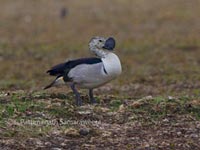 Three Comb Duck seen by member Pathmanath Samarawera at the above location. All three were male birds. Earlier in the year, on May 27th a non-member, Dr Tilak Jayaratne, reported three birds at Vankalai Sanctuary.
16th July 2012 Mannar
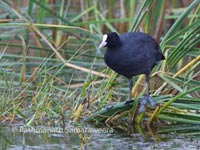 At the causeway, about 300 Whimbrel, 40-50 Eurasian Curlew, 10 Large Sand Plover amongst other common loiterers like Common Redshank, Lesser Sand Plover were observed by member Pathmanath Samaraweera. This is an unusually large number for an off-season.
Also about 200 Common Coot were seen at Tiruketiswaram tank as were another 500 or so at Giant’s Tank by the same member.
8th July 2012 Embilikala, Bundala
A non-member, Dr Mapalagama Premasiri, reported 59 Glossy Ibis Plegadis falcinellus at Embilikala. Very unusual for the off-season and subsequently 19 birds seen by member Sudheera Bandara.
27th June 2012 Uda Walawa National Park
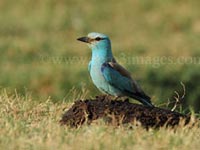 European Roller Coracias garrulus. This bird was first seen by a non-member, Sudath Priyankara De Silva Weerakkody- a jeep driver at Uda Walawa, on 27th June at the Uda Walawa National Park on the ‘Weva pitiya’ past ‘Hulang Kapolla’ road. This is the second record for Sri Lanka.
Member Namal Kamalgoda saw and photographed the adult European Roller on the 30th July.
The first record was an immature seen at Palatupana a few years ago by non-members, Nadeeka Hapuaratchchi and Vimukthi Weeratunge.
21st June 2012 Ruhuna National Park
Ceylon Bird club Chairman Nanda Senanayake and two others saw an adult male Comb Duck Sarkidiornis melanotos at Rukwila in the Ruhuna National Park.
The bird remained at the site the whole day.
3rd January 2012 Tanamalwila
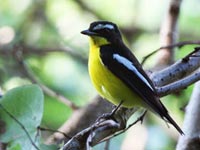 A Yellow-rumped Flycatcher Ficedula xanthopygea was seen and photographed at Tanamalwila, on the approach road to the Lunugamwehera National Park, by member Amila Salgado. This is the second record for Sri Lanka. The first was by Deepal Warakagoda on the Buttala-Kataragama road a few years ago.
28th December 2011 Vankalai Sanctuary, Mannar
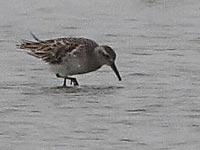
A Sharp-tailed Sandpiper Calidris acuminata reported by members Kithsiri Gunawardena, Deepal Warakagoda and Uditha Hettige. It was feeding in the shallows amidst a large number of other small waders.
27th March 2010
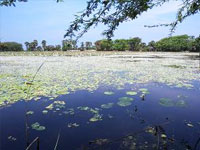
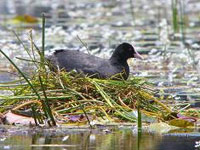 Vankalai Tank A Common Coot was observed sitting on eggs by Ceylon Bird Club members Nanda Senenayake, Kithsiri Gunawardena and Uditha Hettige. The nest was a large mound of lotus leaves, stems etc, in the water about 15 metres from the tank bund. The normally ivory coloured forehead shield and beak had acquired a definite pinkish hue in the sitting bird. In the same tank was another pair with ten chicks. This appears to be the first definitive record of a nest observed in Sri Lanka.
In April 1992 Ceylon Bird Club member Ruwan Perera reports two nesting pairs at Vanniyankulam tank in Anuradhapura, but no mention or description of nest is given.
20th March 2010
Ceylon Bird Club members Deepal Warakagoda, Kithsiri Gunawardena and Uditha Hettige located a Marshall’s Iora’s nest in Tanamalwila. The female was incubating. Another pair with a just fledged young bird was also observed at the same location.
13th March 2010
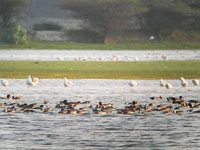 Ceylon Bird Club members Kithsiri Gunawardena, Tara Wickramanayaka and Srinath Seneviratne were able to observe 15-20,000 duck at Vankalai sanctuary which consisted mostly of Wigeon, Shoveller, Pintail and Garganey
27th February 2010
Two Indian Coursers were seen on 20.2 .2010 by a member of the Club close to Arippu. The birds were in a fallow land by the road side, but had quickly disappeared when attempt was made to observe them more closely by alighting from the vehicle. This sighting of the species in Sri Lanka is after a lapse of about ten years.
8th February 2010
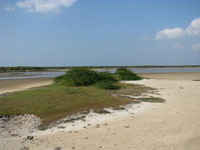 Ceylon Bird Club members Uditha Hettige, Thushara Senanayake, Udaya Sirivardena and Palitha Antony counted over a million waders (count approximated 1.1 to 1.2 million birds) at Vidattaltivu lagoon north of Mannar while conducting the annual water bird census in the area on 5.2. 2010.
What is astonishing is that such a large number of migrants were concentrated over an area of about 2 sq km. About 65 % of the nearer half of the total comprised of Curlew Sandpiper. Others present were Little Stint, Marsh Sandpiper, Lesser Sand Plover, Common Redshank etc. Among the nearer birds, about 50 Avocets were present.
Home | The Club | Birds of Sri Lanka | Rarities & Records Committee | Sri Lanka Bird list | Endemic birds | Conservation | Threatened bird
Waterbird census | Images | Articles | Watching birds | Bird watching sites | News | E-CBCN | Affiliate | Contact
Copyright © Ceylon Birds Club 2010 -2026. All Rights Reserved. - Web Design, Hosting & Maintaining : elikta
Waterbird census | Images | Articles | Watching birds | Bird watching sites | News | E-CBCN | Affiliate | Contact
Copyright © Ceylon Birds Club 2010 -2026. All Rights Reserved. - Web Design, Hosting & Maintaining :
elikta